

Ever wondered what makes ChatGPT tick? This digital marvel isn’t just a brain in the cloud; it’s backed by some serious hardware muscle. Think of it as the brainy athlete of the AI world, flexing its computational biceps to tackle everything from casual chit-chat to complex queries.
Behind the scenes, a sophisticated network of powerful servers and cutting-edge technology fuels its impressive capabilities. It’s like a high-tech kitchen where the finest ingredients—GPUs and TPUs—come together to whip up responses faster than you can say “artificial intelligence.” So, buckle up as we dive into the nitty-gritty of the hardware that powers this conversational wizard and discover what keeps the magic alive.
Overview of ChatGPT
ChatGPT operates on a robust hardware foundation critical for its performance. Powerful servers accommodate extensive computations required for machine learning tasks. High-performance GPUs handle the bulk of graphical processing, enabling quick data analysis and response generation. Specialized TPUs facilitate optimized neural network training, enhancing efficiency.
Data centers house these servers, ensuring reliability and scalability. Each data center utilizes advanced cooling systems to maintain optimal operating temperatures. Extensive storage solutions allow ChatGPT to store vast amounts of training data and model parameters. Networking infrastructure provides high-speed connectivity, crucial for real-time interactions.
Performance optimization results from the collaboration of these components. The use of parallel processing allows ChatGPT to manage multiple sessions simultaneously. Algorithms develop conversations by rapidly analyzing inputs and generating contextually relevant responses. Cutting-edge hardware ultimately supports this complex orchestration, reflecting significant investment in technology.
ChatGPT thrives on a blend of advanced hardware resources. Servers equipped with high-powered GPUs and TPUs form the backbone of its operational capabilities. Data centers and optimized networking facilitate seamless user experiences. This sophisticated hardware environment ensures ChatGPT remains responsive and effective across diverse interaction scenarios.
Key Hardware Components
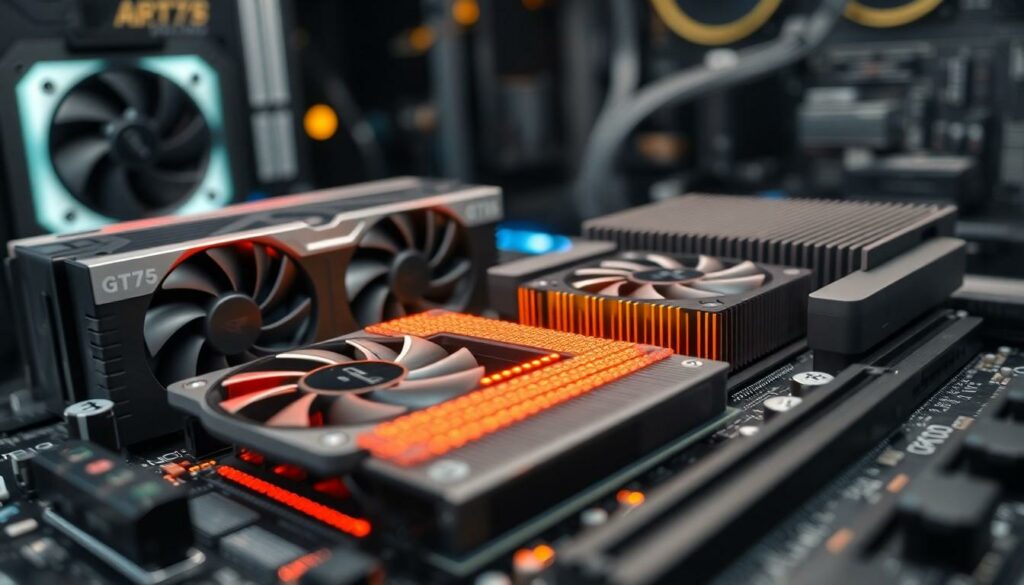
ChatGPT relies on a combination of powerful hardware components that enhance its performance and efficiency. The collaboration between these components enables rapid processing and reliable interaction.
GPUs and Their Role
Graphics Processing Units play a crucial role in ChatGPT’s architecture. They manage intensive computational tasks, executing complex calculations simultaneously. By accelerating data processing, GPUs enable rapid analysis and response generation, significantly decreasing latency. Commonly utilized for tasks such as deep learning and neural network training, GPUs enhance ChatGPT’s ability to support various interactions. The efficiency they provide stems from handling multiple operations concurrently, which optimizes performance during busy periods.
CPUs and Their Importance
Central Processing Units are fundamental for overall system functionality within ChatGPT’s hardware ecosystem. They manage essential tasks, directing workflows and ensuring effective coordination among other components. CPUs handle operations that require less parallel processing, such as data input management and decision-making tasks. While GPUs excel in graphical tasks, CPUs maintain the system’s stability, managing instructions and processing logic. Their seamless integration with GPUs enables a balanced approach that maximizes performance, allowing ChatGPT to respond efficiently to user queries.
Server Infrastructure
ChatGPT relies on a robust server infrastructure that supports its extensive computational needs. This setup enables efficient processing and swift responses for users.
Data Centers and Network Configuration
Data centers play a critical role in hosting ChatGPT’s servers. These facilities are equipped with high-performance GPUs and TPUs that manage complex computations. Network configuration is optimized for low latency, ensuring rapid data transfer across multiple servers. Each data center is strategically located to provide resilience and reduce delays in user interactions. High-speed fiber optic connections link servers, enabling real-time communication between them. Redundant systems in place protect against potential failures, maintaining service continuity. Monitoring systems track performance metrics, allowing for timely adjustments and improvements.
Scalability and Redundancy
Scalability is essential for handling varying demands from users. ChatGPT’s infrastructure can quickly adapt, accommodating spikes in traffic without compromising performance. Additional servers can be deployed seamlessly, ensuring that resources are available as needed. Redundancy is built into the system to enhance reliability. Backup servers automatically engage when primary systems encounter issues, minimizing downtime. This architecture supports parallel processing, allowing multiple interactions to occur simultaneously without lag. As a result, users experience consistent performance regardless of load, underscoring the effectiveness of ChatGPT’s hardware setup.
Performance Considerations
Performance depends on a combination of load balancing techniques, latency management, and response times. These factors significantly influence how effectively ChatGPT operates under varying demand.
Load Balancing Techniques
Load balancing techniques distribute user requests across multiple servers to ensure optimal resource usage. This strategy enhances efficiency by preventing any single server from becoming overwhelmed. By implementing dynamic load balancing, the system adapts in real time, redistributing tasks based on current loads. As a result, increased throughput is achieved without sacrificing response quality. This approach also contributes to the overall reliability of the infrastructure. When one server encounters issues, remaining servers can smoothly handle requests, maintaining uninterrupted service.
Latency and Response Times
Latency and response times are crucial for user experience, with lower metrics indicating better performance. ChatGPT leverages high-speed networking to minimize delays, ensuring prompt interactions. Through the use of advanced optimization techniques, the system analyzes input data rapidly. This rapid analysis results in timely and relevant responses, crucial for maintaining engagement in conversations. Fine-tuning configurations across data centers further reduces transmission delays. Consequently, users experience fast, seamless interactions, even during peak usage periods.
Future of ChatGPT Hardware
The future of ChatGPT’s hardware infrastructure focuses on enhancing performance and efficiency. Upcoming advancements in Artificial Intelligence require a shift toward more powerful and specialized processing units. Companies are researching next-generation GPUs and TPUs to support increasingly complex computations.
Innovative developments in quantum computing show promise for groundbreaking changes in speed and capability. Exploring AI accelerators will also allow ChatGPT to optimize neural network training further, improving response times. Data center expansions will accommodate heightened demands for storage and processing power, ensuring scalability as user queries grow.
Collaborative efforts between hardware manufacturers and AI developers will prioritize performance stability. Enhanced cooling technologies are expected to maintain optimal conditions for robust servers. Sustainable energy solutions will reduce operational costs while meeting environmental standards alongside increasing computational capacity.
Load balancing techniques will further evolve, allowing more adaptive resource management across data centers. By implementing AI-driven analytics, system performance can be continuously monitored and adjusted as necessary. This proactive approach ensures seamless experiences during peak usage periods.
Investments in high-speed networking will support fast data transfer, minimizing latency and ensuring timely interactions. Architects of these systems will emphasize redundancy and fall-back protocols, allowing uninterrupted service during failures. System designs will focus on creating a resilient framework, capable of adapting to future AI innovations.
Future hardware developments will significantly impact ChatGPT’s efficiency, fostering reliable responses in real-time. As the AI landscape evolves, so will the underlying technologies, ensuring ChatGPT remains at the forefront of conversational AI solutions.
The hardware behind ChatGPT is a complex yet harmonious blend of advanced technologies. This powerful infrastructure not only supports rapid response times but also ensures reliability and scalability. As the demand for conversational AI continues to grow, ongoing advancements in hardware will play a pivotal role in maintaining ChatGPT’s performance edge. The future promises exciting developments in processing capabilities and efficiency, solidifying its position as a leader in the AI landscape. With each innovation, ChatGPT is set to deliver even more seamless and engaging interactions, shaping the future of AI communication.