

In the ever-evolving world of artificial intelligence, two heavyweights are stealing the spotlight: Claude AI and ChatGPT. While both are designed to engage users in conversation, they each bring their own unique flair to the table. Think of them as the Batman and Superman of AI—both superpowered but with distinct abilities that set them apart.
Claude AI might charm you with its sophisticated reasoning, while ChatGPT dazzles with its conversational wit. But what truly separates these two titans? From their underlying technologies to their user experiences, the differences are as pronounced as a superhero’s cape. Buckle up as we dive into the quirks and qualities of Claude AI and ChatGPT, helping you decide which one deserves a spot in your digital toolkit.
Overview of Claude AI and ChatGPT
Claude AI and ChatGPT represent leading advancements in AI-driven conversation tools. Each system provides distinct features tailored for various user needs.
What Is Claude AI?
Claude AI stands out for its advanced reasoning capabilities. Designed by Anthropic, it emphasizes safety and interpretability. This AI utilizes deep learning techniques to process language and generate responses. Claude AI focuses on producing responses that align closely with user intentions. Its architecture enables nuanced understanding, making it ideal for complex queries. Users often appreciate its consistency and balanced communication style.
What Is ChatGPT?
ChatGPT, developed by OpenAI, excels in generating conversational and engaging text. This model incorporates reinforcement learning from human feedback, enhancing its conversational flow. ChatGPT is agile, allowing it to adapt to diverse topics and contexts quickly. Users experience an interactive dialogue that feels natural and responsive. Many find its wit and humor particularly engaging during exchanges. Overall, ChatGPT aims to create enjoyable conversations while delivering informative content.
Key Features Comparison
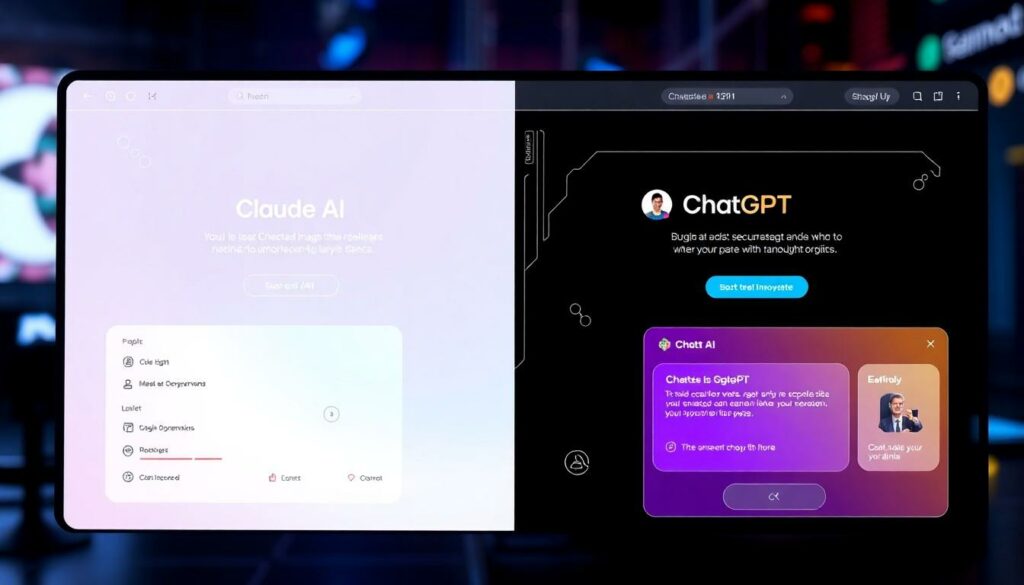
Claude AI and ChatGPT each offer distinct attributes that cater to varied user needs. Their capabilities in natural language processing and user experience highlight these differences.
Natural Language Processing Capabilities
Claude AI excels in understanding context and nuanced language. Developed by Anthropic, it focuses on complex reasoning, making it suitable for intricate queries. This system emphasizes safety and user intent, ensuring conversations are relevant. ChatGPT, on the other hand, shows remarkable adaptability in dialogue flow. OpenAI’s creation utilizes reinforcement learning, which enhances its conversational style. Users frequently find ChatGPT engaging and responsive, allowing for seamless interactions across diverse topics.
User Interface and Experience
Claude AI prioritizes a clean, minimalistic interface, offering straightforward navigation. Users appreciate its design, which avoids overwhelming elements. Focus remains on information clarity and functionality. Conversely, ChatGPT features a more vibrant and interactive interface. This system encourages user engagement through prompts and suggestions, making it enjoyable to interact with. While Claude AI targets focused communication, ChatGPT fosters a lively environment for casual conversations. Each interface reflects its developers’ philosophies, enhancing the overall user experience.
Performance Evaluation
Performance evaluation involves critical assessments of Claude AI and ChatGPT in various areas.
Speed and Responsiveness
Claude AI demonstrates strong speed in processing complex queries. It provides quick responses, particularly when handling nuanced topics. ChatGPT also boasts impressive responsiveness, effectively managing multiple user interactions simultaneously. Through reinforcement learning, ChatGPT refines its conversational fluidity, allowing for natural exchanges. Users report that Claude AI’s responses feel deliberate and context-aware. For rapid-fire queries, ChatGPT excels in delivering catchy replies. Its ability to churn out engaging content keeps conversations lively and encourages user engagement. Both AIs prioritize responsiveness, yet their approaches differ based on user intention and engagement style.
Accuracy and Reliability
In terms of accuracy, Claude AI consistently delivers well-structured, relevant responses. Its focus on reasoning enhances reliability in complex discussions. ChatGPT’s performance shines in casual and creative contexts, where it crafts coherent replies. Its adaptability contributes to a high degree of user satisfaction. Comparison studies reveal that Claude AI often outperforms ChatGPT in more intricate subjects requiring depth. ChatGPT provides accurate information but occasionally diverges when addressing specific queries. Overall, both systems maintain a solid foundation in reliability, yet their strengths align differently based on user needs and query complexity.
Use Cases
Claude AI and ChatGPT cater to different needs and scenarios, making them suitable for various applications.
Suitable Applications for Claude AI
Claude AI excels in tasks requiring advanced reasoning, making it beneficial for legal analysis and compliance checks. Professionals can rely on it for managing complex data and extracting meaningful insights. This system works effectively in customer support roles, where nuanced understanding of user intentions plays a critical part. It proves particularly useful in healthcare settings, aiding in diagnostics and patient interactions by handling intricate queries with safety and relevance. Organizations can integrate Claude AI in environments that prioritize accuracy, safety, and sophisticated decision-making.
Suitable Applications for ChatGPT
ChatGPT shines in environments where engaging conversation matters, such as virtual assistants or chatbots. It works well in educational platforms, offering interactive learning experiences and quick information retrieval. The system provides excellent support for content creation, including brainstorming ideas and drafting articles. Users favor it for casual and creative interactions, where its witty style enhances user experience. ChatGPT fits seamlessly in marketing applications, engaging customers with captivating dialogues and personalized responses tailored to individual preferences.
Pricing and Accessibility
Pricing and accessibility are critical factors when evaluating Claude AI and ChatGPT. Both systems offer distinct cost structures and integration capabilities.
Cost Structure Comparison
Claude AI typically operates on a subscription-based model designed for organizations with complex needs. Pricing varies depending on usage levels and specific features, allowing for flexibility. ChatGPT, however, provides multiple tiers, including free access with limited capabilities and premium options that unlock advanced tools. The premium subscription enhances features while offering more extensive usage. These varied pricing strategies make both systems adaptable to user budget constraints.
Availability and Integration Options
Claude AI can be integrated into enterprise systems through API access, facilitating seamless interaction across various platforms. OpenAI’s ChatGPT boasts equally comprehensive integration options, making it accessible through APIs and partnerships with major software providers. Both systems support a range of applications, ensuring that users can access their preferred AI regardless of preferred tools. This availability underscores their versatility and enhances user experience across diverse operational needs.
Choosing between Claude AI and ChatGPT ultimately depends on specific user needs. Claude AI stands out for its advanced reasoning capabilities and safety features, making it ideal for complex tasks that require nuanced understanding. In contrast, ChatGPT excels in delivering engaging conversations and adaptability, perfect for interactive environments.
Both systems offer unique strengths that cater to different applications. Claude AI is suited for professional domains like legal and healthcare, while ChatGPT thrives in creative and casual contexts. Understanding these differences helps users select the right AI to enhance their experience and meet their objectives effectively.